Life in the fast lane

Simon ‘Si-Fi’ Fisher describes what it’s like aboard an IMOCA at record breaking pace and what this might mean for the futureMatthew Sheahan
“With double points this leg and a pretty extreme forecast, there was a lot on the line,” said 11th Hour Racing Team crew member/navigator Simon ‘SiFi’ Fisher. “It was a pretty complicated forecast as well, with the promise of a lot of fast sailing, flat out, from start to finish.”
On the face of it a simple yet accurate summary of a 3,300 nautical mile leg that took just seven days and saw 11th Hour Racing take a second consecutive win. A victory that also put Charlie Enright’s team in the overall lead by just one point.
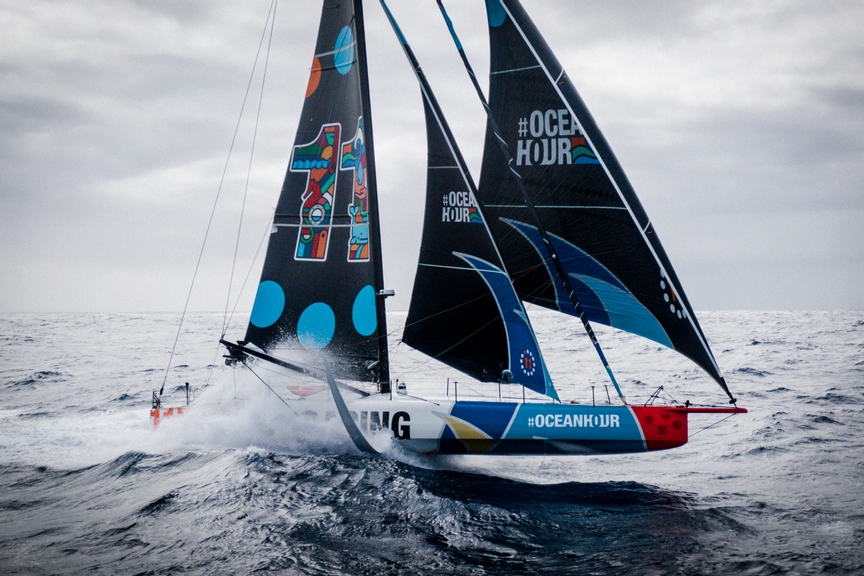
But this was also a leg that pushed everyone to the limit and beyond. A leg that revealed a new and previously unknown level of performance for the IMOCAs and a leg that saw three of the four finishers exceed the 24hour distance record for monohull yachts that was set by the 100ft super maxi Comanche in 2015.
So, while it may not have been the longest leg in this edition of the race, it’s one that the crews will remember for some time. Because for the three front runners, this was a brutal yet rewarding leg.
“The Southern Ocean leg might have been long, but the transatlantic leg was a relentless push from start to finish,” continued Fisher. “There was no time to pace yourself, it was literally flat out all the way. If we weren't topping 30 knots every few seconds, then we weren't pushing hard enough.
“The forecast for the leg suggested that the key was going to be get into the new wind that was sitting on a weather front. As we saw, three out of the four boats made it across and that's what set us up for this really fast sailing in relatively flat water.
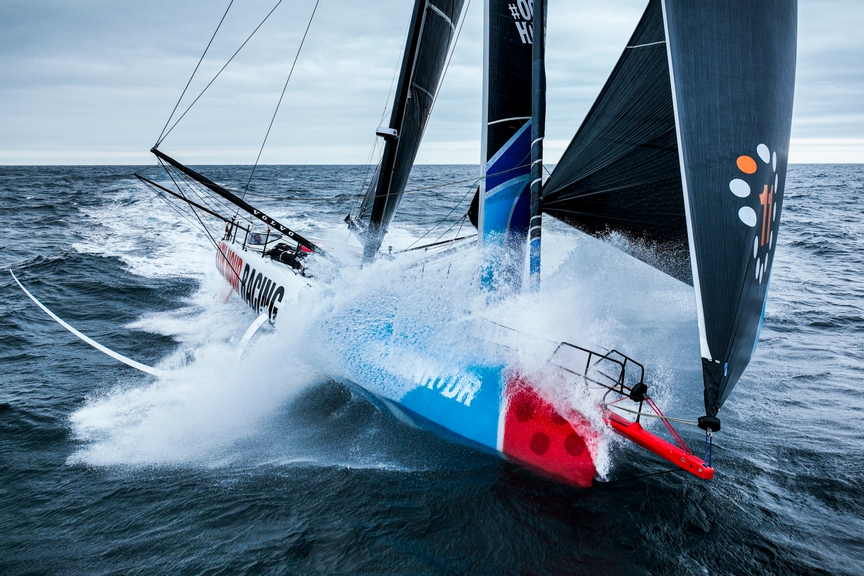
“Sea state is always the biggest impediment to performance in these boats. When you start crashing into the wave in front, it slows you down. We were lucky that the sea state wasn't too extreme. With these foils you're always slamming in and out of the water. When you crash into the wave in front, you have massive deceleration and can easily be thrown across the boat so living on board is pretty hard. Just doing the basic things like trying to boil water to make food or use the toilet becomes a real challenge when you're slamming around and the boat's shaking. On top of that it’s hard to sleep when you get bounced up and down every few seconds, but somehow you just have to manage.
“The potential for injury is also ever present. You could hit something or simply just run into the back of a wave, either way you slow from 30 knots to eight knots in an instant. The risk is that you get flung across the boat and smashed into a bulkhead. It’s a serious risk and as we found out it happens, so I think in the future we will start to see more and more people wearing helmets on these boats.”
Some aspects of the modern IMOCA have improved. In particular, the protection that the fully enclosed superstructure provides. With speeds having taken such a big leap there are questions as to whether this performance hike would have been possible with crews exposed to the elements. But it is also clear that it has changed the way in which the sailing team handles the boat. Changes that look set to trigger a new approach to internal layouts.
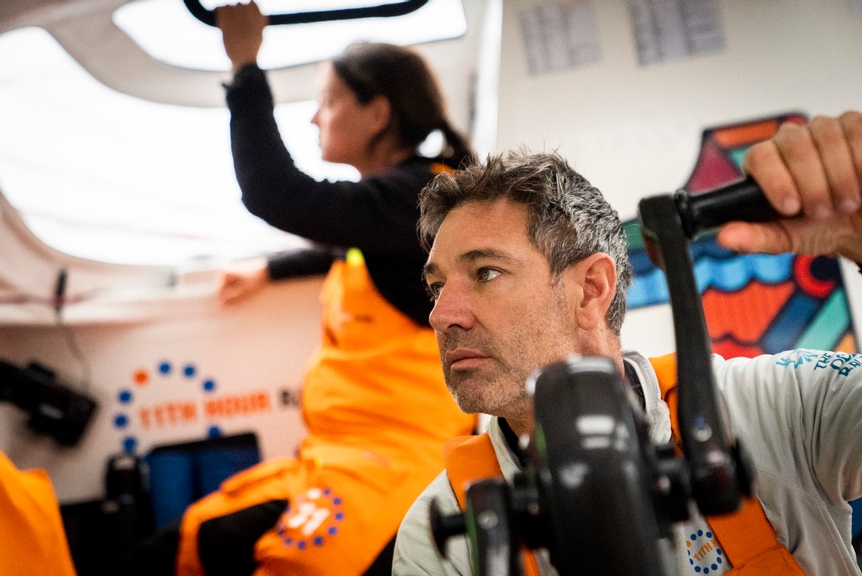
“Even now the boats look very different,” he continued. “Wherever you look there are handholds, whether they are rope loops or physical handles, they are spread out regularly in the boat to allow you to jungle climb your way around. You have to be quite deliberate about when you're going to come in and out of the hatch, or when you're going to move because if you mis-time it you can fall.
“I spent quite a lot of time on my knees. When you're going quite fast and everything's starting to bounce up and down and sometimes it's easier to shuffle around this way and we have quite a lot of foam on the deck for this reason.
“Navigation is also a big challenge. It's something we've had to try and get our heads around. We have a big screen in the cockpit which helps everybody see what's going on. But on our boat we lack a comfy navigation station so there is a lot of navigating on the fly. But it also has to work like this because with only four on board I'm required to do more of the sailing than a navigator might in a bigger crew.
“The process is different too. I need to be much more specific about what aspect of the navigation I’m working on and knowing what the next decision is, focus on that and then fit that around the sailing duties.”
Uncomfortable as high-speed sailing is, it is clear that when it comes to speed goals the cat is now out of the bag, this knowledge cannot be un-invented. Throttling back is not an option in all but the most extreme cases. Instead, understanding how to cope with the physical stress of life at speed and cater for it is the way forwards and requires solutions.
“As we go faster and faster it becomes more important to focus and conserve our energy and not get too beaten up on the boat. Ultimately, this will lead to a real performance gain. So, rather than look at things from just a weight perspective, I believe future developments will be about how to make these boats more comfortable, easier to live on and easier to push harder.
“It's amazing when you take the wind off your face, how unnatural sailing suddenly feels. But, like any boat you learn to feel what the boat needs and what's going on. Whether you feel it through your backside or the sheet in your hand, you use other senses for feedback. But being fully enclosed is definitely strange. Obviously, there are times where it's great to have the roof and there's times when you're in the equator and it's 35 degrees, you wish you could chop it right off.
“Does it work the other way? I think so. Because you're not thinking about being smashed in the face by saltwater doing 30 knots, or the constant gale force wind in your face, you can actually feel the boat in a way that you haven't been able to feel it before.
“I think it gives you the ability to keep pushing when you are going fast and just keep letting the speed roll out rather than constantly bracing for impact from wave after wave. We are also able to sit there for long periods as well. When we were driving a Volvo 70 or a boat like that, there's a limit to how long you can do it when you're getting belted by waves every few seconds.
“Also, with only four, we are forced to sort of spend longer times on watch but we can sit there with control of the boat for hours on end.
“It's a fascinating class to be involved with right now because the learning curve is still pretty vertical and there's actually still a lot of freedom in the design of these boats. And I think it's a really exciting to see so many new IMOCA boats being built for this next Vendée cycle. The wide variety also means that it's even less clear what the right answer is and it’s great to be a part of it right now.
“I think there are probably quite a lot of teams sitting in the Lorient area of France looking at this race thinking that is a is a pretty attractive prospect for the future. The opportunity to put real racing miles on a boat in the Southern Ocean is very valuable, as is knowing where the new limits are on performance. The Vendée Globe may go to the Southern Ocean every four years but they have very little time down there otherwise.
“I've learned an incredible amount and one of the most exciting aspects of this race has been getting into a new class and learning it.”